- by Harry Lawrence
Zen Bamboo Electric Toothbrush VS Suri
- by Harry Lawrence
Sustainable living • Buying guide
Almost every comparison of sustainable electric toothbrushes fixates on the handle. It makes sense. The handle is the part you hold, the part with the design story. But it is also the part you keep for years. The head is different. You replace it every 2 to 3 months, four to six times a year. So when it comes to recurring waste, the head is the part that actually adds up.
That single shift in focus changes how you should compare two of the better options on the market: SURI and the Sustainable Tomorrow Zen Bamboo electric toothbrush.
SURI built its reputation on a genuinely strong handle: a recyclable aluminium body, real repairability, and a managed recycling program. Credit where it is due, that is a serious sustainability story and one of the best handle designs out there.
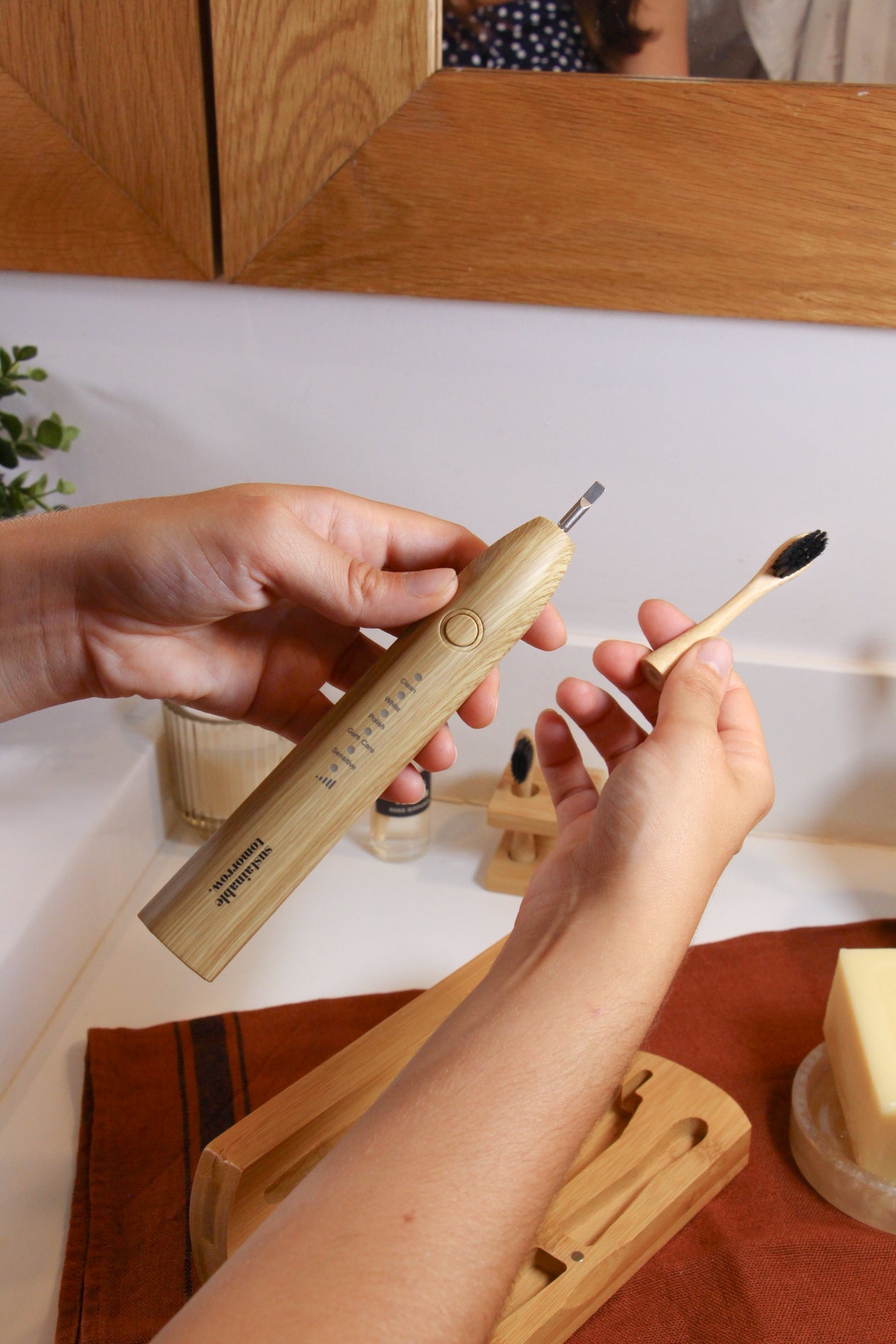
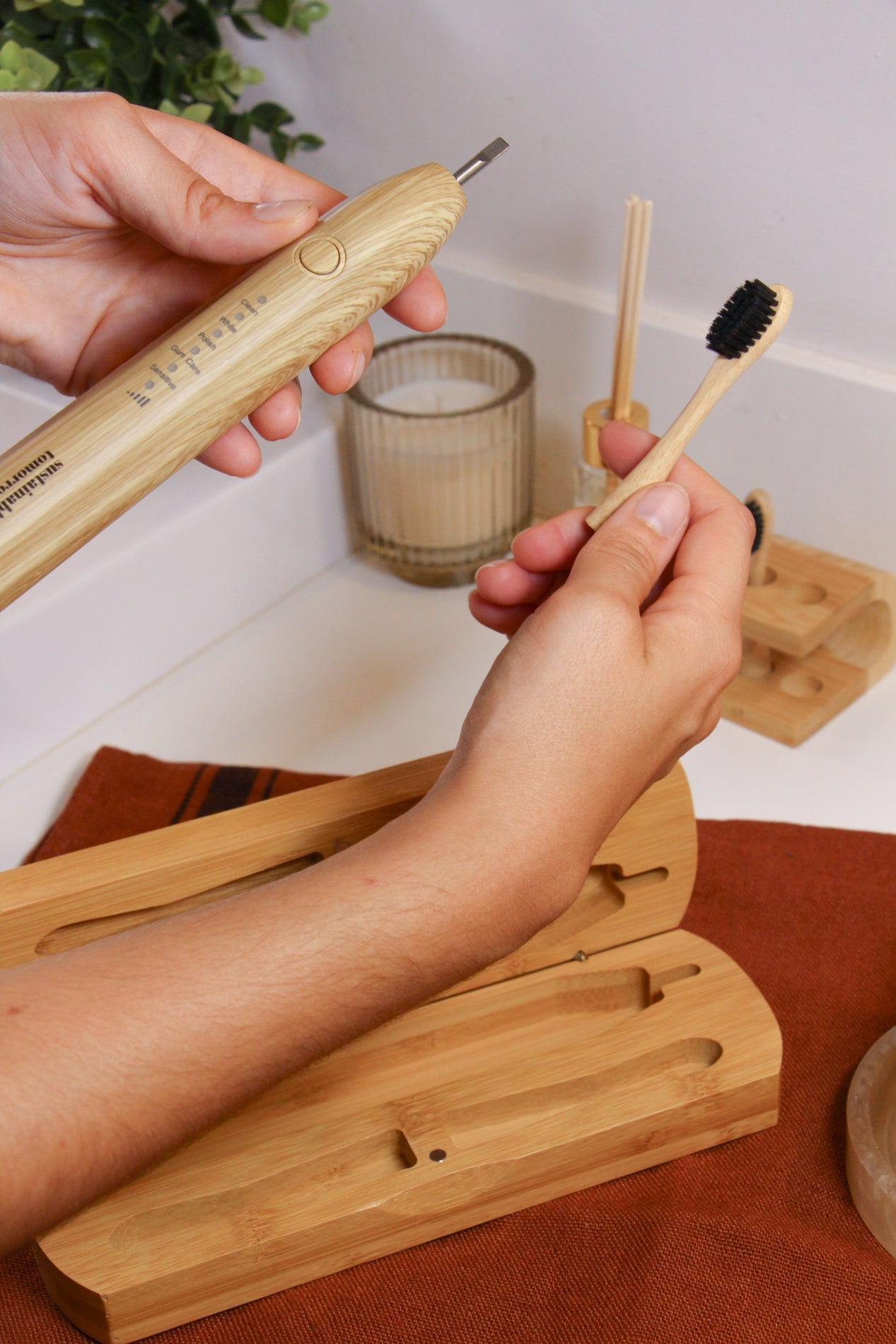
But here is the thing. You buy the handle once. You buy heads again and again. Over a few years of brushing, the heads quietly become the larger source of recurring material and waste. That is exactly where the Zen Bamboo brush is designed to win, because its replacement head is built mainly from raw FSC certified bamboo rather than a molded polymer body.
| SURI | Zen Bamboo | |
|---|---|---|
| Handle | Recyclable aluminium. A standout selling point. | Recyclable ABS with a bamboo style finish, IPX7 waterproof and built to avoid the mold issues a raw bamboo handle can develop. |
| Replacement head | Molded head from cornstarch based materials with bristles derived from castor oil. | Mainly raw FSC certified bamboo, with a small inner fixation layer of cornstarch PLA and plant based Nylon 1010 bristles. |
| End of life | Recycling and return system offered, but the molded biopolymer body is hard to compost or repurpose without industrial facilities. | Bamboo is the main structural material, so there is less processed polymer to deal with each time. |
| Repairability | A clear strength, with long term use in mind. | Covered by a two year warranty, though less focused on repairability. |
| Motor | Around 33,000 sonic vibrations per minute. | Around 38,000 sonic vibrations per minute. |
| Best argument | The handle: aluminium, repairability and recycling. | The head: lower recurring material impact thanks to bamboo. |
To make the head difference concrete, here is a rough comparison of the estimated carbon footprint per replacement head.
These are rough illustrative estimates meant to show relative scale, not certified lifecycle figures.
The difference comes down to material distribution. SURI is a real improvement over petroleum plastic heads, but the structure still relies heavily on molded biopolymer. The Zen Bamboo head instead keeps raw bamboo as the primary material and limits the synthetic portion to the small cornstarch PLA fixation layer and the Nylon 1010 bristles.
Less processed polymer per head can mean less industrial transformation, less long term synthetic waste, and a lower recurring footprint over the life of the brush.
Plant based does not always mean easy to dispose of. Cornstarch and PLA style materials are not the same as bamboo, paper or food waste. They usually need controlled industrial composting: heat, moisture, oxygen, microbial activity and time. Those facilities are limited, not always open to consumers, and many reject bioplastics over contamination concerns.
So the real question is not only whether a brand offers a return program. It is whether the material itself can be composted, recycled or returned to nature without depending on a specialised industrial system. For molded biopolymer heads, the answer is complicated. For a head made mainly of bamboo, it is simpler from the start.
The honest version: the Zen Bamboo head is not perfect zero waste. It still carries a PLA fixation layer and bristles. The point is that bamboo as the main material lowers the recurring footprint before disposal is even a question.
If the handle is what matters most to you, SURI is a fantastic choice and a real sustainability reference. If you care about the part you replace several times a year, the Zen Bamboo brush was designed for exactly that problem. Both move the category forward. They just solve different halves of it.
Our take is simple. Judge a sustainable toothbrush not only by what you hold for years, but by what you throw away every few months.
It depends on what you weigh most. SURI leads on the handle with recyclable aluminium, repairability and a recycling program. Zen Bamboo leads on the replacement head, which is made mainly from raw FSC certified bamboo and carries a lower recurring material footprint. The head is the part you replace four to six times a year, so it has an outsized effect over time.
You keep an electric toothbrush handle for years, but the head is replaced every 2 to 3 months. That means the repeated waste and material impact of an electric toothbrush comes mostly from the heads, not the handle.
Usually not. Cornstarch and PLA style materials typically require industrial composting conditions and are not suited to home compost or landfill. Many composting facilities also reject bioplastics. A head made mainly of bamboo is easier to deal with because most of its structure is a natural plant material.
Plant based Nylon 1010 derived from castor oil, currently one of the most realistic renewable and vegan options for toothbrush bristles.

Bamboo Electric Toothbrush Heads: The Simplest Eco Swap You Can Make Today
Read moreabout Bamboo Electric Toothbrush Heads: The Simplest Eco Swap You Can Make Today